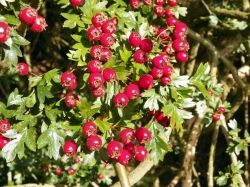
Also known as: Crataegus monogyna, Harthorne, Shen Zha, Poire d’Oiseaux
Healer of the heart, Hawthorn has proven beneficial effects on cardiovascular disease. Considered by Germanic and Slavic populations a magic plant, strengthening the hearts of good people and weakening the hearts of evil and malefic people, Hawthorn was a constant ingredient in the recipes of Paracelsus for the elixir of youth and long life. Another legend also says that Hawthorn grew from the old sceptre (staff) of Saint Joseph.
With more than 250 existing species, Hawthorn is intensively studied by scientific communities. Research shows that Hawthorn increases the amount of blood pumped from the heart in contractions, widens blood vessels and improves the transmission of nerve signals. Used in congestive heart failure (CHF), chest pain and arrhythmia, Hawthorn regulates blood pressure and treats successfully atherosclerosis.
Natural remedy with complex action, Hawthorn is very effective in preventing myocardial infarction, long term studies revealing that Hawthorn intake may reduce by 40 % the heart attack incidence. The Hawthorn cure lasts 3-6 months per year, with 1-2 capsules of fruit extract, 3 times a day, on an empty stomach.
For high levels of cholesterol, the treatment with Hawthorn tea (4 teacups per day for 3-4 weeks) has antioxidant activity, lowering triglycerides and the accumulation of fats in the liver and the aorta. Hawthorn fruit extract increases the biliary secretion, decreasing the formation of cholesterol.
Hawthorn is also recommended for alleviating pre-menopause symptoms such as nervousness, anxiety, hot flashes or palpitation, and has a sedative effect in panic attacks and neurosis. Some people use Hawthorn directly on the skin for sores, itching, ulcers or frostbite.
As major interactions, Hawthorn interferes with Digoxin (Lanoxin), high-blood pressure medication, male sexual dysfunction medication and Nitrates, so address your prescribing physician for further guidance.
- Log in to post comments