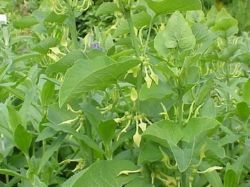
Also known as: Aristolochia clematitis, Poison de Terre, Virginia Snakeroot, Guang Fang Ji
A very powerful herb, regarded by some scientists as poisonous, Birthwort has a long history of use as a remedy, beginning with ancient Egypt, which considered Birthwort the only efficient cure for cobra venom. In the Middle Ages, we find Birthwort as a secret remedy for battle wounds and infections, used by the Spanish knights, while ancient Gauls used the herb to treat any tumor or body excrescence. In popular Romanian medicine, Birthwort root boiled in milk, was used especially for skin diseases, but also for hepatitis, ulcer or colon cancer.
Today, Birthwort is considered unsafe because it contains aristolochic acid, a very toxic chemical for the kidney, which increases the risk for urinary tract cancer and bladder cancer. In the past, the aristolochic acid was considered a stimulant for phagocytosis, with imunostimulant effects in small doses, but recent research shows that the substances contained in Birthwort favor the development of cancer cells. Birthwort is banned in many European countries (France, Germany, Austria, Belgium, Great Britain), in Japan and also U.S.A., while Canadian health authorities removed from sale several Chinese herbal medicines containing Birthwort.
Despite serious controversies, Birthwort is occasionally used by some to boost the immune system, to treat snake bites, to prevent seizures, to start menstruation or in arthritis and gout pains. Due to the fact that there is not enough scientific information to establish the safe doses of Birthwort, it is advisable to consult your healthcare professional before using Birthwort. Remember that natural remedies are not always safe and dosage is very important.
- Log in to post comments